

Conference Coverage
about 16 hours ago
Nurse-Led Education Clears Up Clinical Trial Myths in Kidney Cancerabout 17 hours ago
ESMO 2026: Key KRAS Inhibitor Takeaways for Oncology NursesLatest Content

Oct 26, 2026 | News
ANA Issues New Position Statement on Incivility and Bullying in Nursing
FDA Approves Talazoparib Plus Enzalutamide in HRR-Mutated mCSPC
Oct 26, 2026

Nurse-Led Education Clears Up Clinical Trial Myths in Kidney Cancer
Oct 26, 2026

ESMO 2026: Key KRAS Inhibitor Takeaways for Oncology Nurses
Oct 26, 2026

Psychological Distress Common in Patients With Cancer, Nurse Scientist Says
Oct 26, 2026




Advertisement
Shorts

1:31
Tucatinib Maintenance for HER2+ MBC: What Nurses Need to Know
6 days ago
by
Erika Hamilton, MD
1:29
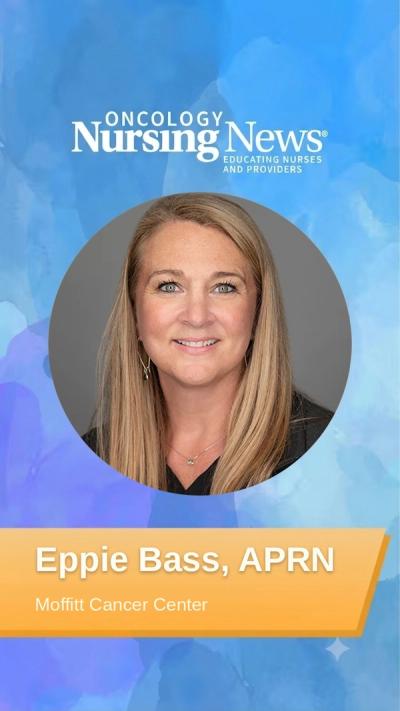
Anktiva for Papillary NMIBC: A Moffitt NP’s Nursing Playbook
8 days ago
by
Eppie Bass, APRN
1:30
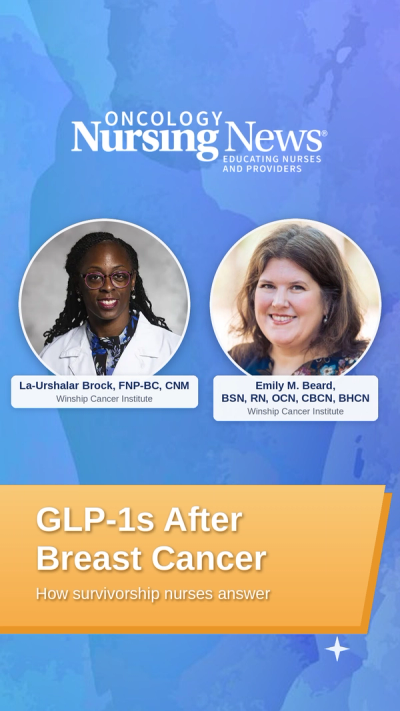
Survivors Are Asking About GLP-1s. Here’s How Nurses Answer
10 days ago
by
By ONN Staff
1:30
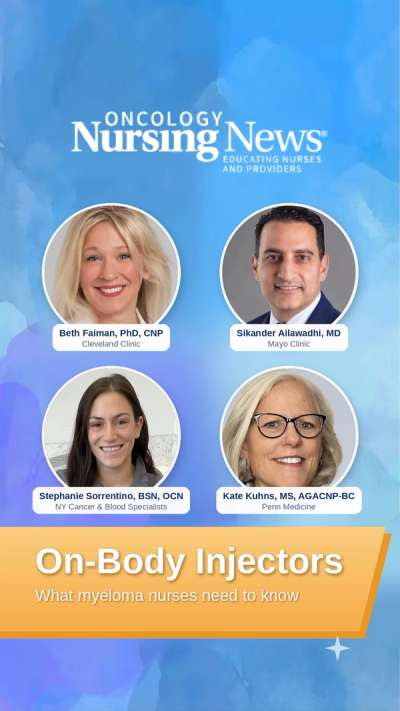
On-Body Injectors Arrive in Myeloma Care: What Nurses Need to Know
14 days ago
by
By ONN Staff

1:31
MBC Awareness Day: What an NP and a Nurse-Patient Want Nurses to Know
15 days ago
by
La-Urshalar Brock, MSN, FNP-BC, CNM

0:45
Navigators Helped 73% of Relatives of BRCA Carriers Complete Testing
16 days ago
by
Roni Nitecki Wilke, M.D., M.P.H.
1:31
FDA OKs Immunotherapy After Surgery for Stage 3 dMMR Colon Cancer
18 days ago
by
By ONN Staff
1:16
FDA Approves Maintenance Tucatinib Regimen for HER2+ Breast Cancer
19 days ago
by
By ONN Staff
1:17
FDA Approves Pirtobrutinib Tablets for First-Line Untreated CLL/SLL Care
22 days ago
by
By ONN Staff

0:47
How AI Speeds Contouring and Planning in Radiation Oncology
24 days ago
by
Suresh Rana, PhD





Videos
























































All News
Advertisement
Advertisement

Stepped care for fear of cancer recurrence was rated feasible by most clinicians, while training all staff to screen was rated least feasible.

A breast surgeon explains how nurses can build baseline bioimpedance screening and long-term lymphedema surveillance into clinic workflows.

Oncology nurses play a key role guiding patients about AI breast cancer risk assessment tools, dynamic re-testing, and individualized screening plans.

Dana-Farber nurse practitioners outline ADC patient selection, sequencing, ILD surveillance, and patient education from JADPRO Live 2026.

Brianne Whitley, CNP, of Dana-Farber, shares strategies for hot flashes, sexual health, survivorship planning, and clinical trial access for men.
The approval covers IV and subcutaneous pembrolizumab and raises the TMB-H threshold from 10 to 13 mutations/megabase.

The oral, once-daily EGFR inhibitor is now in specialty distribution for patients whose disease progressed after platinum-based chemotherapy.

Explore how nurses support kidney transplant candidates diagnosed with renal cell carcinoma, covering early detection, treatment options, and care.
Dana-Farber's Brianne Whitley, CNP, details red-flag symptoms, ER-positive biology, and why every man with breast cancer needs a genetic referral.

European survey reveals how oncology nurses manage complex multiple myeloma care amid time and resource constraints.
Advertisement
Leslie Smith, DNP, discusses mediating trial care, vetting protocols for nursing scope of practice, and guiding frontline nurses toward research.

Erika Hamilton, MD, breaks down liver monitoring, diarrhea, creatinine shifts, and oral adherence with maintenance tucatinib in HER2+ MBC.
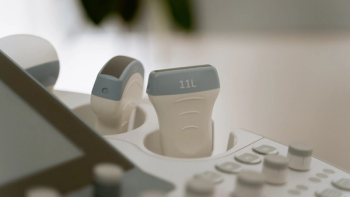
ABUS matched handheld ultrasound on cancer detection in women with dense breasts while lowering recall and short-interval follow-up rates.

Long-term QUILT-3.032 data in BCG-unresponsive NMIBC with CIS show durable responses for some patients and a long, surveillance-heavy course.
The approval in stage II/III MSI-H/dMMR rectal cancer rests on AZUR-1, in which 71% of patients needed no treatment beyond dostarlimab.
Advertisement
Advertisement
Trending on Oncology Nursing News
1
Psychological Distress Common in Patients With Cancer, Nurse Scientist Says
2
ESMO 2026: Key KRAS Inhibitor Takeaways for Oncology Nurses
3
FDA Approves Talazoparib Plus Enzalutamide in HRR-Mutated mCSPC
4
ANA Issues New Position Statement on Incivility and Bullying in Nursing
5